Hi,
In the Implement echo#IZ3, it is mentioned that “The echo builtin prints its arguments to stdout, with spaces between them, and a newline (\n) at the end.“
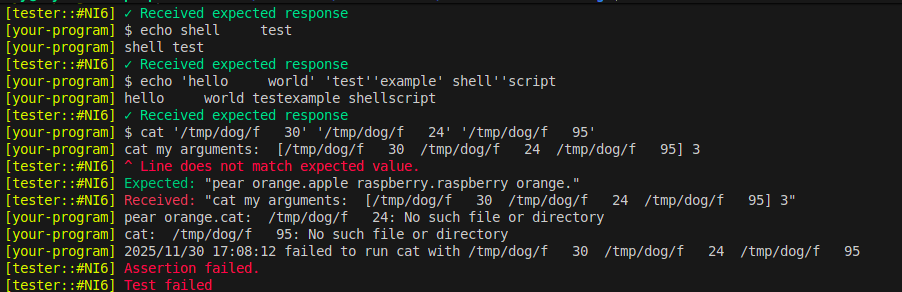
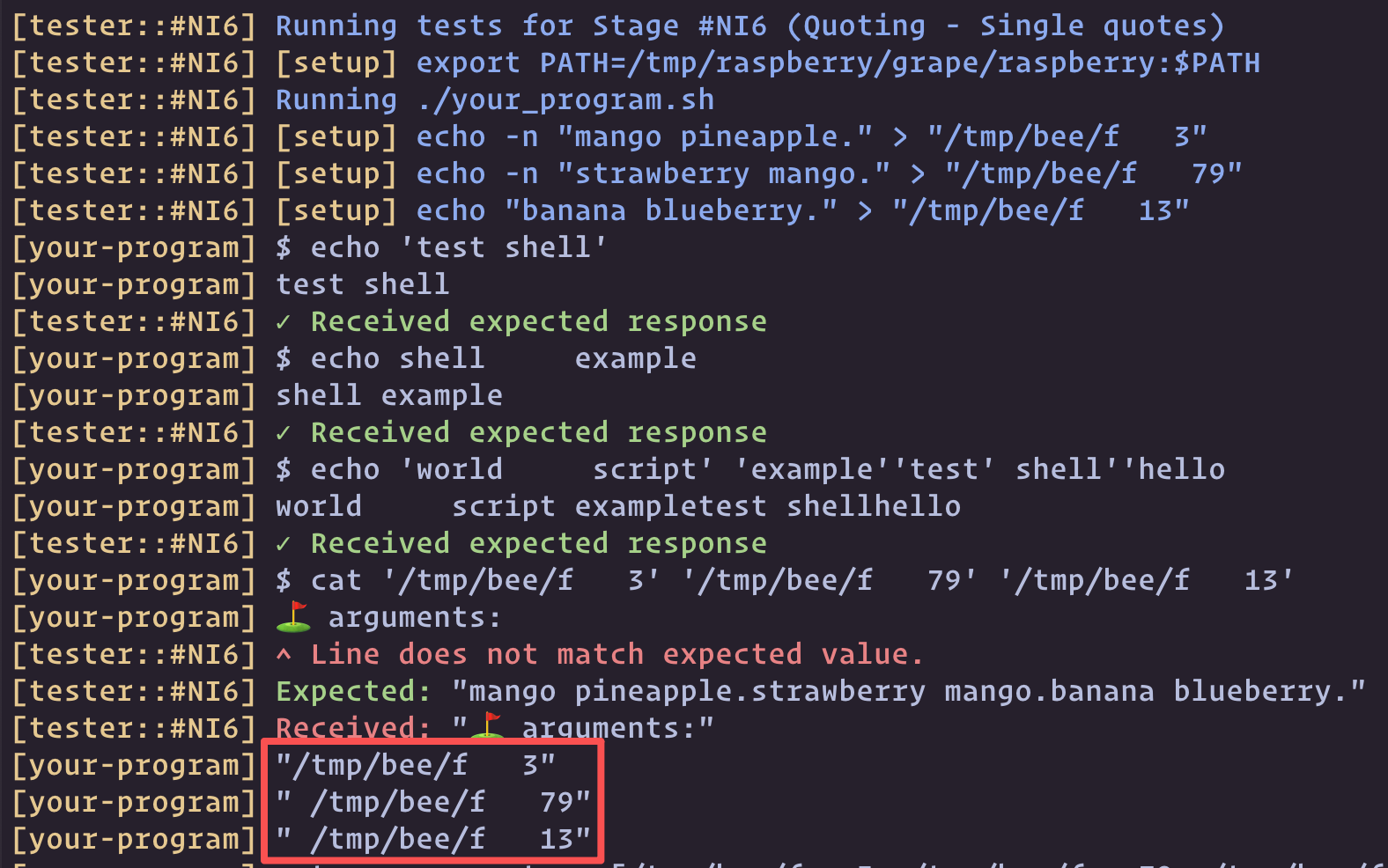
But this is failing in the #ni6 (1st ss).

After encountering the issue above I remove the new line character which passed some of the tests:

In the above ss, although the error conveys that the single quotes were handled as desired, you can see it failed tests as such dirs/files were not created.
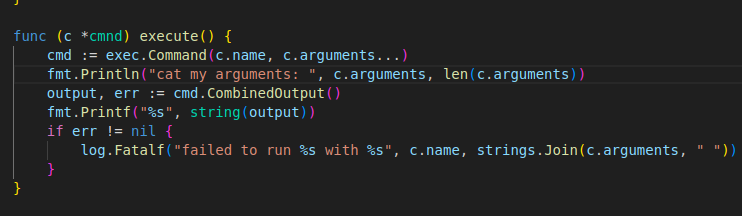
How executable command is handled:
func (c *cmnd) execute() {

    cmd := exec.Command(c.name, c.arguments...)

output, err := cmd.CombinedOutput()

fmt.Printf("%s", string(output))

if err != nil {

log.Fatalf("failed to run %s with %s", c.name, strings.Join(c.arguments, " "))

    }

}
How echo is handled:
func (c *cmnd) echo() {

    output := strings.Join(c.arguments, " ")

// fmt.Printf("my output: %s,len of output: %d ,len of arguments array: %d", output, len(output), len(c.arguments))

//older implementation #IZ3
//fmt.Fprintf(os.Stdout, "%s\n", output)

// new implementation
fmt.Fprintf(os.Stdout, "%s", output)

}
How single quote is handled:
func sanitiseArgs(argumentString string) string {

    // the boolean flag of single quote represents whether to consider

// the string as literal or not in the window iterated

// if true -> yes, false -> no.

chars := make([]rune, 0)

singleQuote := false

lastRune := '\x00'

for _, r := range argumentString {

currentRune := r

if currentRune == '\'' {

singleQuote = true

lastRune = currentRune

continue

        }

if singleQuote {

chars = append(chars, currentRune)

lastRune = currentRune

        } else {

if currentRune == lastRune && currentRune == ' ' {

continue

            }

chars = append(chars, currentRune)

lastRune = currentRune

        }


    }


return string(chars)


}
Is the above code adding an extra new line?
TIA